Spaced Repetition and Retrieval Practice: Why They Beat Cramming
The note-taking templates, weekly planner and exam-revision checklists that go with our guides — free.
If you change only one thing about how you revise, make it this: stop re-reading and start testing yourself, spread over time. Two of the most robust findings in learning science — retrieval practice and the spacing effect — consistently beat the cramming most students default to.
Retrieval practice: pull, don’t re-read
Re-reading notes feels productive because the material grows familiar — but familiarity is not the same as recall. Retrieval practice means closing the book and trying to reconstruct the answer from memory: flashcards, past-paper questions, or simply explaining a topic aloud. The effort of retrieving is what strengthens the memory, which is why a hard recall beats a comfortable re-read every time.
The spacing effect: spread it out
The same total hours produce far more durable memory when spread across several days rather than massed the night before — the spacing effect. Six hours over four short sessions will outperform one six-hour cram, and you will sleep normally before the exam. Your semester plan is what makes spacing possible, which is why time management and revision are really one system.
Spaced repetition: the two habits combined
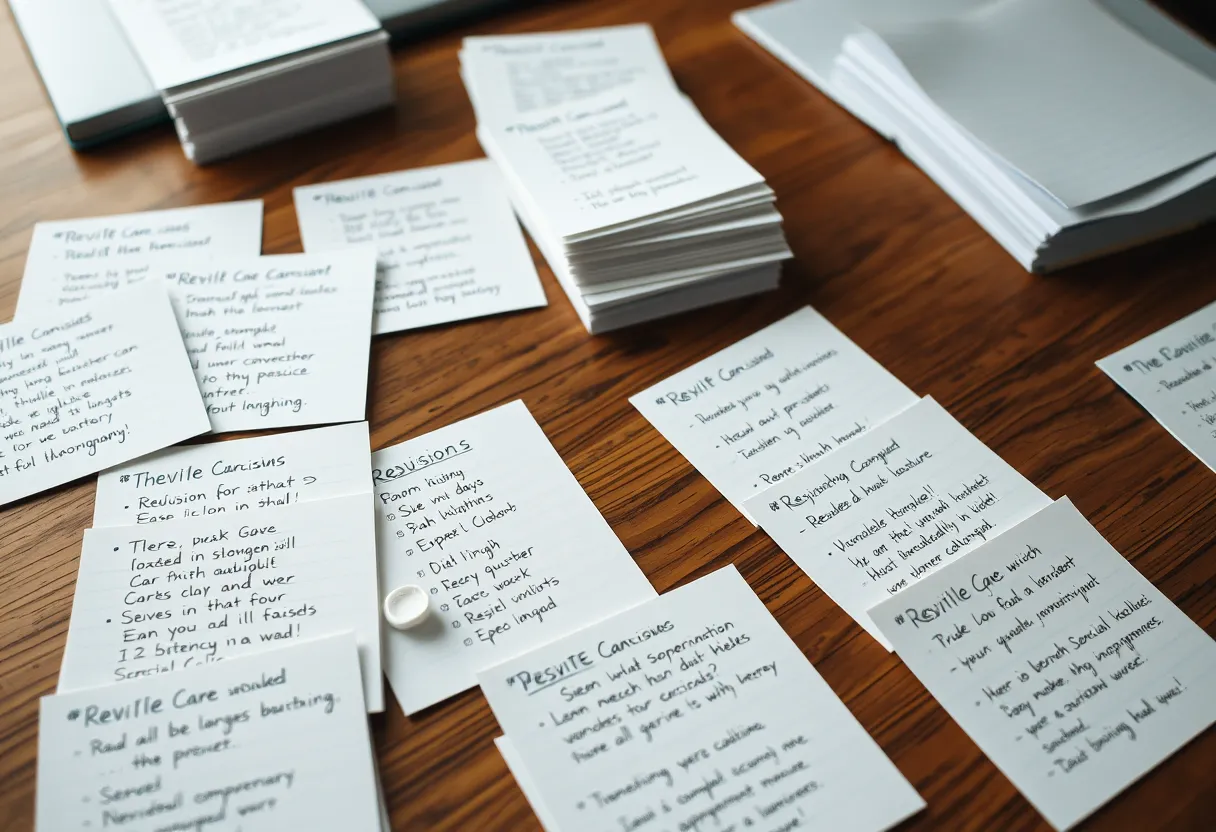
Spaced repetition is retrieval practice on a spacing schedule: you test yourself on each item at expanding intervals — a day later, a few days later, then weekly — and review the ones you get wrong more often. Flashcard apps automate the schedule, but index cards and a simple “review again in N days” box work just as well. Build the deck as you go, straight from the cue questions in your lecture notes.
Make it a weekly habit, not a pre-exam scramble
The trick is to start early and keep it small. Fifteen minutes of self-testing a few times a week, from the first weeks of term, means revision is topping up a memory rather than building it from scratch under pressure. By the exam you are practising recall you already have — calm, confident, and far better prepared than a week of cramming could ever make you.
Want the full guide?
Enter your email for free access to the rest of this article and the study-skills resource library.
Frequently asked questions
What is retrieval practice?
Retrieving information from memory — via flashcards, past questions or explaining aloud — rather than re-reading. The effort of recall is what strengthens memory, so it beats re-reading for exam preparation.
What is the spacing effect?
The finding that the same study time produces more durable memory when spread across several days rather than crammed at once. Four short sessions beat one long one.
How do I use spaced repetition?
Test yourself on each item at expanding intervals (a day, a few days, then weekly), reviewing the ones you get wrong more often. Flashcard apps automate this, but index cards work too.
Is cramming ever effective?
Cramming can scrape a short-term pass but fades fast and wrecks sleep before the exam. Spacing and retrieval produce far more durable learning for the same total hours.